September 9, 2010
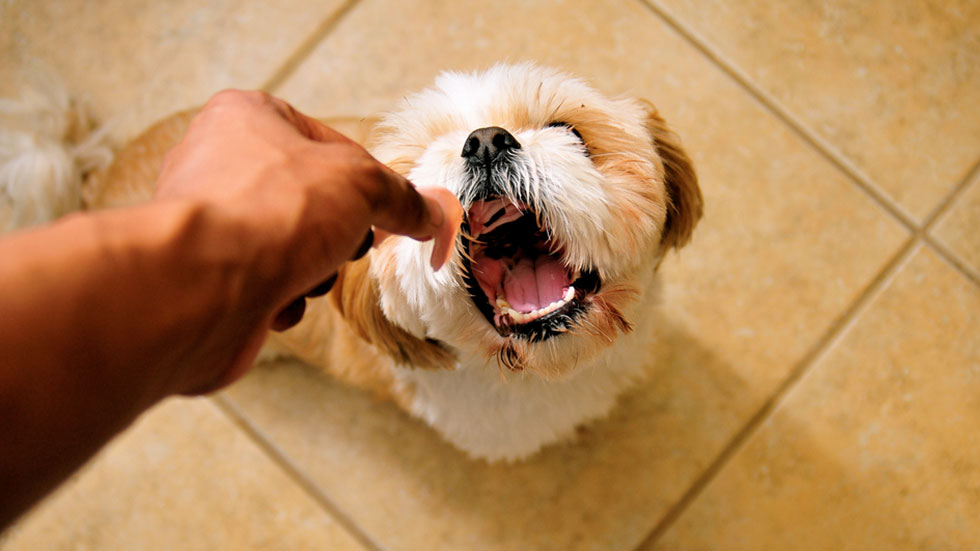
Good and Bad People Food for Dogs
You’ve seen the face. You know, the one that only appears when you’re standing at the kitchen counter preparing a meal, or eating at the dinner table, or just having a snack on the couch. The look says, “Can I have some? Please? I’ve been good today. Just a little piece, please?”
Pet owners have strong opinions about people food for dogs. Some forbid it, while others treat it as the dog’s regular, hard-earned dessert. A third group keeps treats out of the kitchen and dining area to discourage begging, but occasionally uses people food for treats and training.
No matter what group you fall into, it is important to know what foods are harmful for dogs, and which foods are healthy additions to their diet. (In moderation, of course.) DogTails’ new food series, Dog Treats, tackles this issue today. Check out our list, and keep an eye out at home, as food-loving dogs often find both equally appetizing.
The Good
Yogurt is a cool, tasty treat most dogs love. Stick to plain, unsweetened yogurt, as the flavored varieties often include too much sugar or artificial sweeteners – both of which are not good for dogs. Some experts even cite plain yogurt as a source of healthy bacteria that helps dogs regulate their digestive systems. Like humans, certain dogs will have a negative reaction to dairy, so keep the serving size small, especially when it is first introduced.
Sweet Potatoes are healthy vegetables that are often used as ingredients in pet foods. You can serve them cooked or slice and dehydrate them to make yummy chewy treats. Modern Dog magazine highlights this food as a great source of fiber and select vitamins. Similarly, squash and pumpkin are also healthy veggie treats for dogs.
On the carnivore’s side, Lean Meats are a great source of protein for dogs. When feeding dogs fresh lean meats like chicken, beef and pork, you will want to make sure that: 1) the meat is well-cooked, 2) the fat has been trimmed, and 3) there are no seasonings. Certain herbs and spices (see below) are hazardous to your dog’s health and should be avoided.
Chicken Broth can help make your dog’s dry food more palatable. If you’re going with the store-bought variety, make sure you pick up the low-sodium option. Regular canned broth contains too much salt for dogs, and could cause excessive thirst or an even more serious reaction.
We recommend giving people food to dogs only in moderation, and always paying careful attention to the dog’s behavior and health when introducing a new treat. If you have any questions at all regarding appropriate food choices, contact your veterinarian.
The Bad
On the flip side, we have foods that dogs should avoid eating. Grapes can harm a dog’s kidneys, and should be avoided, along with raisins and wine.
Chocolate is a well-known toxin for dogs. Chocolate contains caffeine and theobromine, which can negatively affect a dog’s heart and nervous system. Baking chocolate contains the highest level of these compounds, and as a result it is the most dangerous to dogs if consumed.
Alcohol is also extremely dangerous for dogs. It can cause symptoms ranging from nausea to difficulty breathing to coma.
As mentioned above, certain herbs and spices should also be avoided. These include garlic, chives, onions and mustard seeds.
Finally, candy is also off-limits. These products often contain excess sugar and in some cases, harmful artificial sweeteners like Xylitol. So remember, with Halloween just around the corner, steer your dog away from the candy baskets!
For a complete list of toxic foods, visit the ASPCA or the Humane Society of the United States websites.
We invite you to share your dog-friendly recipes here, or on our Facebook page.
Photo by Andrew Vargas via Flickr. Photo is cropped.
September 2, 2010
Even Dogs Get the Back to School Blues
 For the past couple of weeks, students everywhere have shown signs of that seasonal bug, the Back to School blues. The end of summer means less time to play outside with friends, and more time devoted to classes and homework. That’s enough to put most kids in a bit a funk, but did you know the family dog might also share their pain?
That’s right, dogs can suffer from the Back to School blues, too. This week, Dog Tails gives families tips to help their dog manage the transition from summer vacation to a new school year. By following this prescribed “homework,” you can help banish these blues soon and restore your dog to a happy state.
Dogs are sensitive to changes in their daily routine. Back to school represents a particular challenge. Days once filled with outdoor play, activities and attention are now mostly solitary and a lot less exciting. To ease the transition, experts suggest slowly adjusting the dog’s schedule to the new routine. Shift playtime and walks to morning and evening hours, and away from school hours.
This gradual transition can help avoid the dreaded curse of back to school season: separation anxiety. These feelings often cause dogs to act out in destructive ways, including excessive barking and chewing or eating things they shouldn’t.
August 26, 2010
Five Ways Dogs Can Change Your Life
 Being a dog owner is not easy. To raise a dog properly, you need to devote time, money and passion to the job. Moments of frustration are bound to occur, and at regularly intervals. Successes are often followed by small failures and false starts. You may even lose your favorite pair of shoes to your puppy’s teeth.
As any dog owner can tell you, however, all of that effort is worth it. Bringing a dog into your home will change your life. Your dog’s unconditional love, unsinkable spirit and unabashed smiles can improve your health and well-being in many ways.
To prove our point, Dog Tails has compiled a list of the top 5 ways that dogs can change your life for the better. Read on, and learn more about how these amazing creatures make our lives better every day.
August 18, 2010
Facebook for Fido: The Best Pet Social Media Sites
Last week in DogTails, we had a great time profiling our favorite social media all-star pets. Continuing with the theme of pet-centric social media, this week we want to share our opinions on a few of the most popular social sites and applications for pet owners.
We love how these tools now allow users to share their pets’ stories, photos and videos, and connect with fellow furry friends around the world. These sites are entertaining, informative, and a great way to keep your friends near and far up-to-date on your pet’s cutest, funniest, sweetest and craziest moments. We hope you’ll enjoy our reviews, and try one out for yourself and your pet! Who knows, maybe they’ll be the next social media pet stars!
Dogbook
Facebook is the most popular social media site on the planet, and this fun application allow you to share information with your fellow pet owners without leaving the site. Created in 2007, Dogbook allows owners to create their own mini-pages for their pets. Like a regular Facebook profile, a Dogbook profile include pictures, status updates, lists of friends (human, canine or other animal) and even location tracking.
 But what about your other animals? Don’t worry, there are apps for them too. Catbook, Horsebook, Birdbook, Ferretbook, Rodentbook and Fishbook are all there and ready to use. The apps’ creators have also developed an iPhone app exclusively for Dogbook users. It allows them to see where their dog’s “friends” are and meet up for a playdate. (Watch this video for more details.)
Dogbook is easy to use, and is a great way to connect with your pet-owning friends and meet new friends across the globe. You can join groups based on breed or geography or any other characteristic you choose. There are currently over 2 million users on Dogbook and another 1 million on Catbook. That’s quite a crowd!


